
Why Your Restaurant Video Ads Not Working?
Some of the fastest growing restaurants in the world have video marketing as part of their strategy, and for good reason: video content is emotional and draws in the viewer to the point of becoming a customer. When it comes to turning viewers into customers, restaurants need more than pretty food shots. The winning formula for Restaurant Video Ads in 2026 is all about authenticity, quick visuals, and storytelling that makes people feel hungry and connected. However, some restaurant owners spend a lot of money on marketing and video ads, only to see little to no return. If that is the case for you, this guide is for you to understand why and to help you through the process using strategies grounded in research and real-world case studies.
1. Your Restaurant Video Ads has no story
Forget the sales pitch. A story is so much more powerful, and so is a well-constructed narrative. If the only thing you have in your ad is a few shots of your food, some background music, and no emotional arc, your viewers will lose interest. Story-driven content is far more effective, and there is a reason for that: it evokes emotion and connection, and that is far more powerful than food. 300% more powerful, according to Social Motion Films (2024).
The customer should be your focus. Use a relatable feeling to kick things off. Maybe it’s a craving, stress, or hunger. Then describe how your restaurant takes care of it.
Imagine someone looking for dinner ideas after a long workday, then picture your restaurant’s chef making a comforting meal, and picture that customer again after a long workday, smiling and satisfied after that first bite.
People remember stories, and your restaurant will be associated with warm feelings and satisfaction. This storytelling will set your video apart and it will drive customers to your restaurant.
2. You Haven’t Optimized Per Platform
You will need to tailor each video to each platform and audience. People make a big mistake when they just upload the same video to different sites. Each platform has its own algorithm, audience, and video requirements. ResearchGate (2025) mentions that the same content on different sites like YouTube, Instagram, or TikTok will yield different results.
Platform | Best Ratio | Ideal Duration | Ideal Content Type |
|---|---|---|---|
Instagram Reels | 9:16 | 15–30 sec | Fast-paced food shots, chef moments |
Facebook Feed | 1:1 or 16:9 | 15–60 sec | Offers, testimonials, atmosphere |
YouTube | 16:9 | 30–60 sec | Full restaurant story or brand film |
TikTok | 9:16 | 6–20 sec | Fun trends, challenges, “behind the plate” |
The solution is adjusting and fitting each video version for the location it will be used. An Instagram 15-second vertical video teaser set with subtitles is perfect, while YouTube does better with a 45-second “chef’s story” horizontal format. Change the sizing of the video, include captions, and alter the metadata title, description, hashtags for each platform. This approach, which each content piece feels tailored for the audience and not like a copy, often results in doubled engagement.
3. The Production Quality Isn’t Appetizing
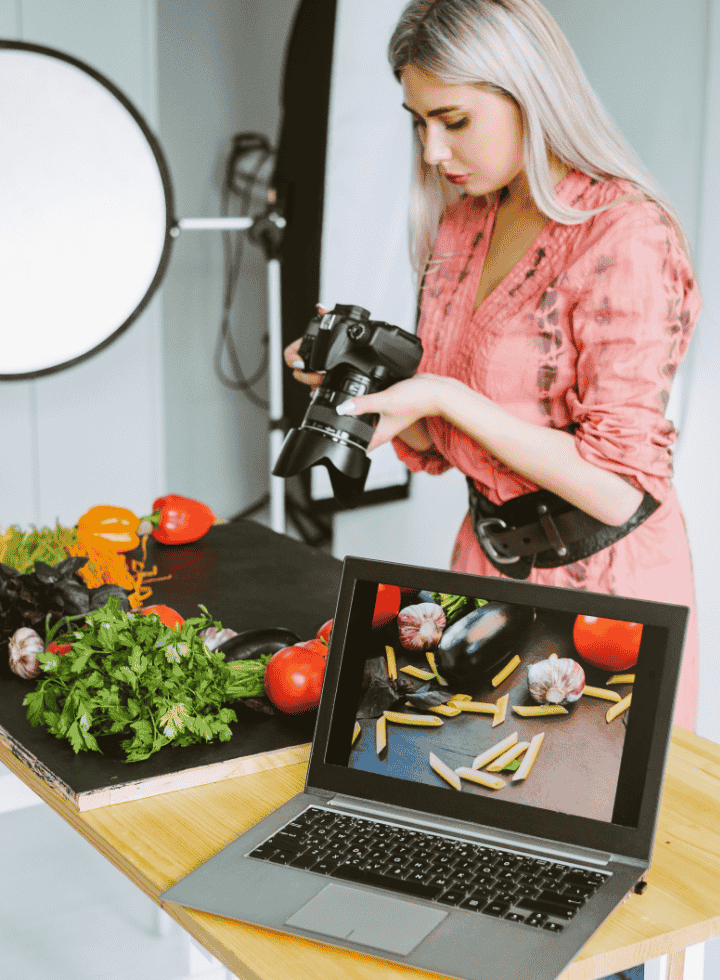
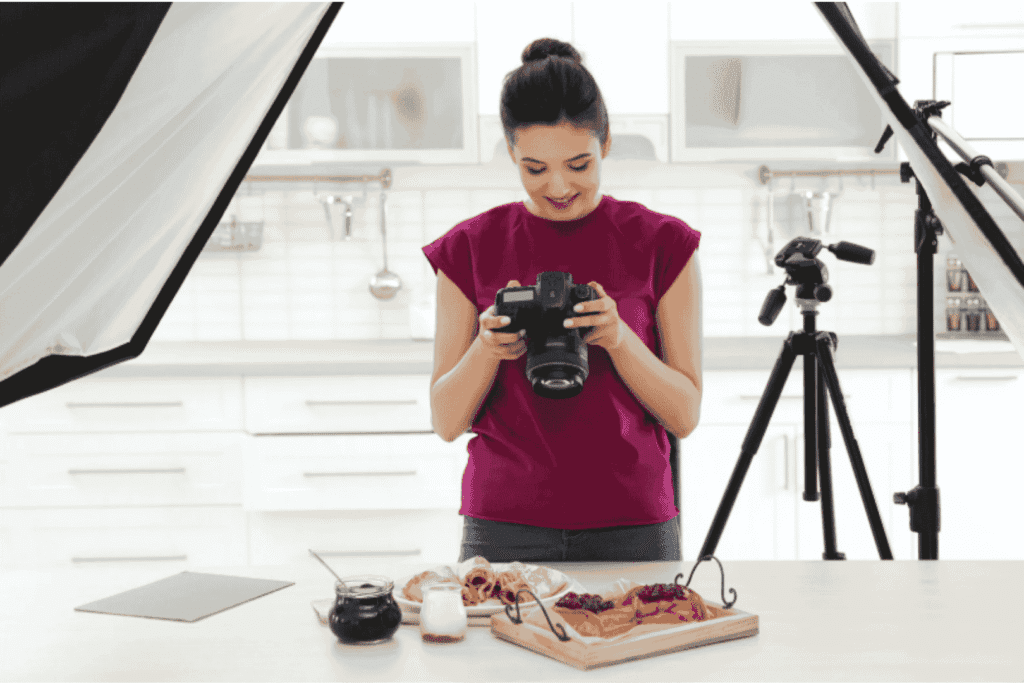
Even the best story fails if the visuals look dull. In today’s saturated feed, viewers expect crisp, cinematic footage especially when it comes to food. Inadequate food presentation, poor lighting, and shaky footage will more likely hurt the food. LocalEyesIT (2024) promotes the best visuals as the key to valuable brand perception and worth.
Properly fixing the issue should begin with confident visuals.
Natural light or soft LEDs
Natural light or soft LEDs are excellent for showing the subtleties of color and texture.
Capture intimate images of the food
- steam rising from a soup, cheese pulling, or a spoon breaking into a dessert. These images work with the other senses to create ‘visual taste.’
Stabilize the camera
Stabilize the camera, design for several angles, and edit for brevity and energy.
A professional food stylist and videographer can certainly help, although maybe not for all your shots. Mouth-watering images capture attention, even with a smartphone. A restaurant’s identity rests on these more than on the tastes of the food. If the food doesn’t photograph appetizingly, it most likely won’t taste good to your customers.
4. A Strong CTA is Missing
You’ve hooked the viewer, created hunger – what’s next? If the video ends without an actionable prompt, you are leaving gold on the table. Research from LocalEyesIT (2024) states that a visual or verbal CTA can lift conversions by up to 28%.
It’s easy. Know what you want people to do next, and communicate that directly.
- If you want people to make reservations, say, “Book your table tonight, link in bio.”
- If you want people to order takeout, say, “Order your favorite meal now.”
You should have CTAs, or calls to action, prominently displayed on the screen and repeated in the captions. Incorporate urgency with words like “today,” “now,” or “before 8 PM.” CTAs aren’t pushy; they just give viewers the last little nudge they need to make a purchase.
5. You Pine People Off in the First Few Seconds
Because of social media, people are trained to scroll quickly. This means that the first five seconds of your ad will determine if people are going to watch or scroll. Social Motion Films (2024) says that restaurant videos with enticing openings have 65% higher watch time.
Start with your most powerful visual moment; not with your logo!
- Grab your audience’s attention with something that’s hard to resist a slow-motion pour, a flaming grill, or a mouth-watering close-up bite.
- To add a touch of curiosity, use on-screen text like, “The city’s best burger?” or add a hint of humor with, “Warning: this will make you hungry.”
The audience should stop mid-scroll and think to themselves, “Wow, what’s that?” Once you’ve gained their attention, you can tell your story. No empty title cards or shots leading the frame. Remember, time is valuable!
6. You’re Overestimating the Importance of Audio!
Did you know that over 80% of the audience on Facebook and Instagram watches videos with the sound off? If your message is delivered through a voiceover or music and relies on that alone, you are losing most of your audience! Sound-dependent ads perform poorly on mobile, warns Social Motion Films (2024).
To solve this problem, create a “mute-proof” version of your video.
- Caption every line of dialogue or narration.
- Use on-screen text for offers, menu items, and slogans like “Fresh. Local. Unforgettable.”
- Rely on your visuals to communicate: show feelings, actions, and outcomes.7 The music can set the tone, but should not convey a message.
Before publishing, play a muted version of your video to see if a new viewer can understand your message. If they can, you’ve achieved your goal.
7. Your Video Is About You, Not the Customer
Many restaurant videos speak a little too much about themselves, saying things like “We opened in 1995,” “We won this award,” or “Our chef studied in France.” While this information builds credibility, it does not create an emotional connection. Customer-focused storytelling, or content that centers around the audience rather than the brand, tends to outperform brand-centric content because viewers find self-referential scenarios much more relatable (ArXiv, 2025).
Each new skill to learn also presents additional creative opportunities. This is a continuous process
To bring about a change, try a new approach.
- Consider the experience of the customer: the comfort of the atmosphere, the pleasure of companionship, the satisfaction of a lunch break.
- Emphasize the words “you” and “your” instead of “we” and “our.”
- Don’t just say “we serve the best seafood” make it personal, “you’ll savor the freshest catch in town.”
- Use customer reactions as evidence.
When customers see themselves consuming the food, it becomes an emotional sale.
8. Targeting the Wrong Audience
Everything, no matter how magnificent, will flop if the intended audience is not tailored for it. One research conducted on short-form video marketing found that a combination of local targeting and optimizing the platform yields the best results.
One powerful illustration is HeyDay Marketing’s case study on Miami’s KAE Sushi. The restaurant published a short video featuring the chef, and in a follow-up, gave a discount code to those who had watched over half the video. The outcome was incredible – 70,799 views, a $0.02 cost per view, and a 400% revenue increase.
To make your marketing more effective:
- Focus your advertising on specific locations. Use geo-targeted advertising within a few miles of your restaurant.
- Focus on audiences with interests in “foodie,” “fine dining,” and “local eats.”
- Schedule posts when your audience is most likely to be hungry—around lunch and dinner time.
- For example, retarget anyone who recently watched or interacted with your videos and provide them with follow-up offers.
- Be consistent. Post often to your Instagram Reels, YouTube Shorts, and your Google Business profile to keep your audience engaged.
The more they see your posts, the more likely they are to remember you, and the more likely they are to make a reservation.
Remember, the first step is the most vital. Get your camera, go outside, and look up. The stars have been waiting for billions of years; tonight, let them inspire you
Budget-Friendly, Real-World Inspiration: Going Viral
A great example of smart, low-budget marketing is Shoki’s Ramen in Sacramento. The owners posted a teaser video of noodles being prepared and filmed on a phone. During a brand revival, the owners posted the teaser video and within hours, the video received 7,400 views and Shoki’s Ramen received hundreds of comments. The restaurant even got a shoutout in a Wharton magazine (Wharton Global Youth, 2024) and other local publications. The restaurant got attention not because they had the best video equipment but because they had a good story and a creative marketing plan.
The importance of these case studies is to demonstrate the value of resourcefulness and smart strategizing to increase reach and boost sales.
write By: Pial Hasan Shadhin
Frequently Asked Questions (FAQ)
Q1. How long should my restaurant video ad be?
The sweet spot is 15–30 seconds for social media and up to 60 seconds for YouTube. Short, punchy content retains attention better and fits algorithm preferences.
Q2. What type of content works best?
Appetizing close-ups, chef moments, happy customers, and special offers work wonders. Behind-the-scenes shots showing authenticity also perform well.
Q3. Do I need a professional team?
Not necessarily. Many restaurants achieve viral success using smartphones with good lighting and basic editing. The story and quality of visuals matter more than expensive gear.
Q4. How can I measure success?
Track engagement (views, likes, shares), watch-time, click-throughs, and conversions (reservations or orders). Combine data from Meta Ads, YouTube Analytics, or Google Business to calculate ROI.